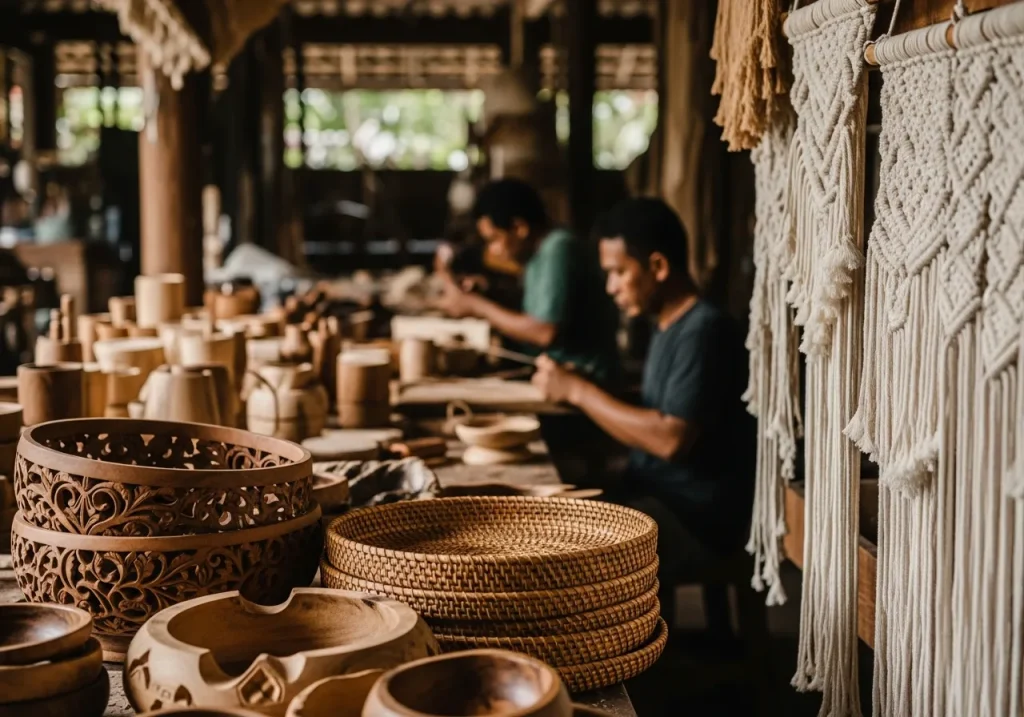
Indonesia’s home decor market, including Bali products, is projected to grow from approximately USD 10.1 billion in 2024 to USD 11.1–11.3 billion by 2027, representing an annual growth of 3–4%. Bali home decor wholesale, a niche segment, is experiencing faster growth than the domestic average due to international demand and e-commerce.
Comparison: Traditional Ubud vs. Modern Seminyak Wholesalers for 2027 Home Decor
As export sales director for Bali Home Decor Wholesale, I regularly observe the distinct characteristics of Bali’s primary sourcing hubs: Ubud and Seminyak. For importers, wholesalers, retailers, and interior contractors planning their 2027 inventory, understanding these differences is crucial for strategic procurement. This briefing outlines the market context and specific attributes of each area, enabling informed sourcing decisions.
Indonesia Home Decor Market: 2027 Projections and Bali’s Role
The Indonesian home decor market, encompassing Bali-made products, demonstrates consistent growth. It reached USD 10.07 billion in 2024 and is projected to reach approximately USD 14.19 billion by 2033, exhibiting a 3.88% Compound Annual Growth Rate (CAGR) from 2025–2033. Alternative projections by IMARC suggest a market value of roughly USD 10.9–11.2 billion by 2027, with a 3.73% CAGR from 2026–2034.
A separate study by 6Wresearch indicates that the home decor market in Indonesia is expected to record a growth rate of 9.85% by 2027. This higher near-term growth rate, compared to IMARC’s medium-term average, suggests an acceleration driven by rising middle-class incomes and urban renovation demand within Indonesia. While Bali’s specific home decor output is not isolated in national statistics, its production of furniture, handicrafts, and natural-material decor contributes significantly to Indonesia’s overall export figures and domestic tourism spending.
Given Bali’s established role as a major artisanal and tourism centre, and the strong export orientation of many producers, it is reasonable to infer that Bali-linked production accounts for a mid-single-digit percentage of Indonesia’s broader home decor and handicraft economy. Export-oriented producers on Bali often exceed the national 3–4% CAGR for home decor, particularly those catering to Western and Asia-Pacific importers.
2027 Note: Importers should anticipate continued demand for natural and artisan-made home decor products throughout 2027, driven by global trends favouring sustainability and unique, handcrafted items. Supply chains will remain a critical focus for maintaining competitive pricing and delivery schedules, requiring robust communication with wholesale partners.
Ubud: Traditional Craftsmanship and Authentic Materials
Product Specialisation
Ubud, located in Bali’s central highlands, is historically recognised as the island’s cultural and artistic centre. Wholesalers in this region specialise in products that reflect traditional Balinese craftsmanship and indigenous materials. This includes:
- Wood Carvings: Intricate sculptures, panels, and furniture made from teak, suar wood, and other local hardwoods. Designs often incorporate spiritual motifs, Balinese mythology, and natural forms.
- Stone Carvings: Statues, garden ornaments, and decorative items crafted from volcanic stone and river pebbles.
- Textiles: Hand-woven fabrics, batik, and ikat, often used for wall hangings, cushion covers, and throws.
- Natural Fibres: Items made from rattan, bamboo, water hyacinth, and seagrass, including baskets, lampshades, and small furniture pieces. These often feature traditional weaving patterns.
- Ceramics and Pottery: Hand-thrown and hand-painted ceramics, frequently featuring earthy tones and organic shapes.
Sourcing and Production Dynamics
Ubud’s wholesale operations are typically characterised by a direct relationship with local artisans and workshops. This structure allows for greater customisation and authenticity but can sometimes result in longer lead times for large-volume orders. Quality control is often managed through established artisan networks and direct oversight of production. Packaging and logistics from Ubud involve navigating inland routes to major ports like Surabaya or directly from Denpasar, requiring efficient internal transportation arrangements.
Target Market Appeal
Products sourced from Ubud appeal to buyers seeking:
- Authentic, handcrafted items with cultural significance.
- Natural, sustainable materials.
- Bohemian, rustic, or ethnic-inspired decor.
- Fair trade and artisan-supported products.
Seminyak: Modern Design and Contemporary Aesthetics
Product Specialisation
Seminyak, on Bali’s southwest coast, is a hub for contemporary design, fashion, and lifestyle. Wholesalers here focus on modern interpretations of Balinese aesthetics, often blending traditional materials with sleek, minimalist, or industrial designs. Their product range includes:
- Contemporary Furniture: Clean-lined teak furniture, often combined with metal, glass, or upholstered elements. Dining tables, chairs, and outdoor lounge sets with modern profiles.
- Decorative Lighting: Modern lampshades and fixtures using natural materials (rattan, bamboo) but with contemporary forms, or incorporating metal and glass.
- Home Accessories: Abstract sculptures, minimalist ceramics, and decorative objects that fit into modern interior schemes.
- Soft Furnishings: Cushions, throws, and rugs in contemporary patterns and colour palettes, often using natural fabrics like linen and cotton.
- Outdoor Decor: Weather-resistant furniture and decor designed for modern patios and garden spaces.
Sourcing and Production Dynamics
Seminyak wholesalers frequently operate with a more streamlined, factory-based or consolidated workshop approach. They are often adept at managing larger production volumes and adhering to international quality standards. Their proximity to Denpasar and established logistics networks can facilitate quicker turnaround times for standard orders. Design and product development are often driven by international trends, with a focus on scalability and consistency. Packaging and logistics are typically efficient due to better infrastructure access.
Target Market Appeal
Products sourced from Seminyak appeal to buyers seeking:
- Modern, minimalist, or Scandinavian-inspired decor.
- High-quality, durable items suitable for contemporary homes and commercial spaces.
- Versatile pieces that can integrate into various design schemes.
- Efficient supply chains and consistent product lines.
Key Differences: Ubud vs. Seminyak Wholesalers (2027 Perspective)
The following table summarises the core distinctions relevant for 2027 procurement strategies:
| Characteristic | Ubud Wholesalers | Seminyak Wholesalers |
|---|---|---|
| Primary Aesthetic | Traditional, rustic, ethnic, spiritual | Modern, contemporary, minimalist, industrial |
| Material Focus | Hand-carved wood, stone, natural fibres (rattan, bamboo, water hyacinth), hand-woven textiles | Teak (clean lines), metal, glass, modern fabrics, natural materials with contemporary finishes |
| Craftsmanship | Artisan-driven, individual workshops, emphasis on unique hand-finishing | Consolidated workshops, skilled labour, emphasis on consistent finishes and scalable production |
| Product Customisation | Higher potential for bespoke, one-off designs, but longer lead times | Customisation often within existing modern design frameworks, efficient for volume |
| Lead Times | Potentially longer for large or highly customised orders due to artisan-based production | Generally shorter for standard and volume orders due to streamlined processes |
| Quality Control | Direct artisan oversight, traditional methods, occasional variability inherent in handcrafted items | Standardised processes, factory-level QC, focus on consistency and international compliance |
| Logistics Access | Inland location, requires efficient internal transport to ports | Closer to Denpasar, better infrastructure access for direct port transfers |
| Pricing Structure | Reflects artisanal labour and unique designs, potentially less scalable discounts | Reflects production efficiency and material sourcing, often more structured for volume orders |
| Innovation Focus | Preservation of traditional techniques and motifs | Adaptation of global design trends, material combinations, functional innovation |
Strategic Sourcing for 2027
For importers and trade buyers, the choice between sourcing from Ubud or Seminyak, or a combination of both, depends on your brand’s aesthetic, target market, and operational requirements for 2027. If your clientele values authentic, handcrafted items with a strong cultural narrative, Ubud offers an selection. For those catering to modern, design-conscious consumers requiring consistent quality and efficient supply chains, Seminyak is the more appropriate hub.
Many successful importers leverage both regions to create diverse product lines that appeal to a broader market segment. Combining traditional Balinese craftsmanship from Ubud with the contemporary designs of Seminyak can result in a unique and comprehensive home decor offering that caters to various global design preferences.
We invite you to discuss your specific 2027 home decor sourcing needs. Our team at Bali Home Decor Wholesale is equipped to guide you through the intricacies of Bali’s production landscape, ensuring you connect with the right suppliers for your business objectives. Please request a wholesale quote on WhatsApp to begin your procurement planning.