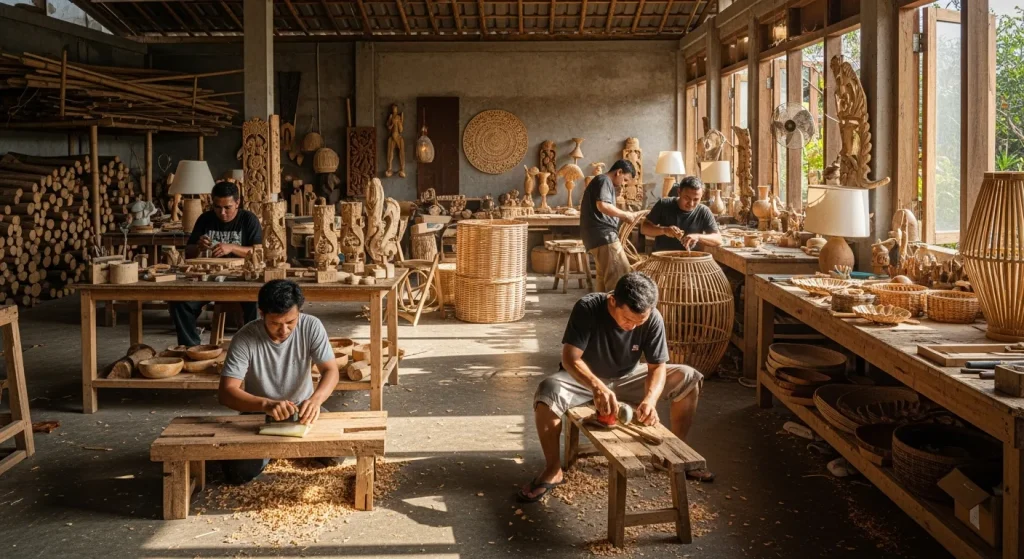
The Indonesian home decor market, including Bali-made products, is projected to grow from approximately USD 10.1 billion in 2024 to roughly USD 11.1–11.3 billion by 2027, indicating an annual growth rate of around 3–4%. Bali home decor wholesale represents a strategically important export segment, experiencing faster growth than the domestic average due to international demand.
Buyer Guide: Verifying Sustainable Materials in Wholesale Bali Home Decor
As an importer, wholesaler, retailer, or interior contractor, your clients increasingly prioritise sustainability. This guide provides practical steps for verifying sustainable materials when sourcing wholesale home decor from Bali. Ensuring product integrity and responsible sourcing practices is crucial for maintaining market relevance and consumer trust.
1. Understanding Sustainable Materials in Bali Home Decor
Sustainable materials in Bali home decor typically include fast-growing natural fibres, reclaimed woods, recycled glass, and ethically sourced stones. Key examples are bamboo, rattan, water hyacinth, teak wood (from certified plantations or reclaimed sources), and lava stone. Verification involves understanding the origin, processing, and environmental impact of these materials.
1.1. Bamboo and Rattan
Bamboo and rattan are rapidly renewable resources. Verification involves confirming that these materials are not harvested from protected areas and that harvesting practices are non-destructive. Enquire about the supplier’s sourcing regions and their harvesting protocols. Legitimate suppliers should be able to provide details on their supply chain, including the communities or plantations from which materials are acquired.
1.2. Reclaimed Teak and Other Woods
Reclaimed wood, often from old buildings, boats, or railway sleepers, is a highly sustainable option. Verification requires proof of origin for the reclaimed material. Suppliers should be able to specify the source of the reclaimed wood and demonstrate that it is genuinely repurposed rather than newly felled timber misrepresented as reclaimed. For new wood, look for FSC (Forest Stewardship Council) certification or equivalent national standards that ensure responsible forest management. While FSC certification is less common for smaller Balinese workshops, reputable suppliers will still have clear documentation of their wood sources.
1.3. Natural Fibres (Water Hyacinth, Seagrass, etc.)
Fibres like water hyacinth and seagrass are often harvested from waterways, where they can be invasive species. Their use in home decor helps manage their proliferation. Verification involves understanding the harvesting methods and ensuring they do not negatively impact local ecosystems. Suppliers should be able to explain their fibre acquisition process, including any community engagement initiatives related to harvesting.
1.4. Recycled Glass and Metals
Recycled glass and metals reduce demand for virgin materials and minimise waste. Verification requires understanding the source of the recycled content. For glass, this might involve local collection networks; for metals, it could be industrial scrap. Suppliers should provide assurances regarding the percentage of recycled content and the cleanliness of the recycling process.
2. Market Context: Indonesia and Bali Home Decor
The Indonesia home decor market reached USD 10.07 billion in 2024 and is projected to reach USD 14.19 billion by 2033, demonstrating a 3.88% CAGR (2025–2033). IMARC’s 2025 value of USD 10.46 billion and 3.73% CAGR from 2026–2034 implies an Indonesia market of roughly USD 10.9–11.2 billion by 2027. A separate Indonesia-focused study (6Wresearch) projects a growth rate of 9.85% by 2027, suggesting near-term acceleration driven by rising middle-class incomes and urban renovation demand.
Bali’s home decor output is primarily counted within Indonesia’s furniture/handicraft exports and domestic tourism spending. While no major source isolates “Bali home decor” numerically, Bali-linked production is inferred to account for a mid-single-digit percentage of Indonesia’s home decor and handicraft economy. Export-oriented producers often grow above the 3–4% national decor CAGR, particularly those serving Western and Asia-Pacific importers.
2027 Note: By 2027, the Indonesian home decor market is expected to show accelerated growth, potentially reaching a 9.85% growth rate, reflecting increased domestic demand and continued international interest in artisanal products. This growth will further underscore the importance of verifiable sustainable sourcing as market scrutiny increases.
3. Due Diligence Steps for Buyers
Effective due diligence involves a combination of direct communication, documentation review, and, where possible, site visits or third-party audits.
3.1. Requesting Documentation and Certifications
- Material Origin Certificates: Ask for documents detailing the origin of raw materials. For wood, this might be a felling license or proof of purchase from a certified plantation. For reclaimed materials, it could be documentation of the demolition site or previous use.
- Supplier Self-Declarations: While not third-party verified, a detailed self-declaration from the supplier outlining their sustainable sourcing practices provides a baseline for discussion and commitment.
- Third-Party Certifications: Although less common for small Balinese workshops, some larger operations may hold certifications such as FSC for wood, or local environmental awards. Enquire about any such accreditations.
- Traceability Records: Request information on how materials are tracked from source to finished product. This demonstrates a commitment to transparency.
3.2. Direct Communication with Suppliers
Engage in specific discussions about their sustainability policies. Ask targeted questions:
- How do you ensure your wood is legally sourced?
- What measures are in place to prevent over-harvesting of natural fibres?
- Do you work with local communities for material sourcing, and what are the benefits for them?
- What are your waste management practices during production?
Observe the consistency and detail in their responses. Vague answers may indicate a lack of robust practices.
3.3. Factory and Workshop Audits (Remote or On-Site)
If feasible, conduct an on-site audit of the production facilities. This allows direct observation of material storage, production processes, waste management, and worker conditions. If an on-site visit is not possible, request video tours or detailed photo documentation of their facilities and raw material storage areas. Focus on:
- Material Storage: Are raw materials clearly labelled and separated?
- Production Waste: How is waste managed and disposed of? Are there efforts to recycle or repurpose waste materials?
- Worker Conditions: Observe safety measures and general working environment, which are often correlated with overall responsible business practices.
4. Understanding Labour Practices and Social Sustainability
Sustainable sourcing extends beyond environmental considerations to include social sustainability. Ethical labour practices are integral to the overall sustainability profile of Bali home decor.
4.1. Fair Wages and Working Conditions
Enquire about the wages and benefits provided to artisans and workers. While specific figures may not be disclosed, suppliers should be able to articulate their commitment to fair compensation and safe working environments. Look for evidence of proper ventilation, lighting, and safety equipment in workshops.
4.2. Community Engagement
Many Balinese artisans operate within close-knit communities. Suppliers who actively support these communities, perhaps through fair trade initiatives, direct sourcing from local farmers, or community development projects, demonstrate a stronger commitment to social sustainability. Ask about any community programmes or partnerships.
5. Examples of Verifiable Sustainable Practices
Here are some examples of information and evidence a reputable Bali home decor wholesaler should be able to provide:
| Material Type | Verifiable Practice / Evidence | Buyer Benefit |
|---|---|---|
| Reclaimed Teak Wood | Photos of wood before processing (e.g., old boat planks), origin statements from demolition companies, or supplier’s own collection records. | Guaranteed repurposing, reduces deforestation impact, unique aged aesthetic. |
| Bamboo/Rattan | Statements on sourcing from managed plantations, details on non-destructive harvesting methods, or partnerships with local farming co-operatives. | Ensures rapid renewable resource use, supports sustainable agriculture. |
| Water Hyacinth | Description of harvesting from local waterways, often linked to managing invasive species; photos of collection process. | Environmental benefit of waterway clearing, utilisation of natural abundance. |
| Recycled Glass | Explanation of local glass collection points, descriptions of melting and moulding processes, or certifications of recycled content percentage. | Reduces landfill waste, lowers energy consumption in production. |
| Natural Stone (Lava Stone) | Information on quarrying practices, compliance with local environmental regulations, and responsible extraction methods. | Ensures responsible geological resource extraction. |
6. Conclusion and Next Steps
Verifying sustainable materials in wholesale Bali home decor requires diligence and direct engagement with suppliers. By focusing on material origin, production processes, and social responsibility, you can ensure that your sourced products align with global sustainability standards and consumer expectations. This proactive approach safeguards your business reputation and contributes to responsible trade.
For further information on our sourcing practices and to discuss your wholesale requirements, request a wholesale quote on WhatsApp. We are committed to transparency and providing detailed information about our materials and production processes.