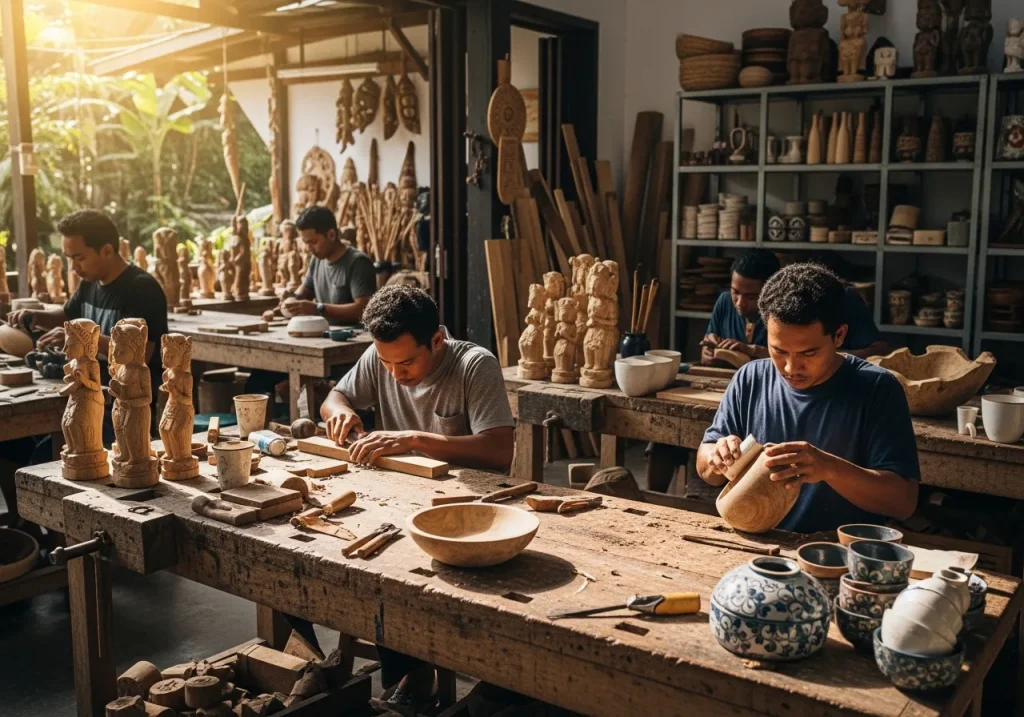
The Indonesian home decor market, including Bali-made products, is projected to expand from approximately USD 10.1 billion in 2024 to USD 11.1–11.3 billion by 2027, indicating an annual growth rate of 3–4%. Bali home decor wholesale, while a smaller segment, is strategically important due to its export and tourism-driven growth, often exceeding national averages.
Comparison: Bali Rattan vs. Wooden Home Decor for Your 2027 Wholesale Inventory
As export sales director and senior content lead for Bali Home Decor Wholesale, I provide this detailed briefing for importers, wholesalers, retailers, interior contractors, and trade buyers considering their 2027 inventory. This analysis compares Bali rattan and wooden home decor, focusing on market relevance, material characteristics, design implications, and logistical considerations for wholesale procurement.
Market Size & Growth (Indonesia/Bali Context)
The Indonesia home decor market reached USD 10.07 billion in 2024. Projections indicate growth to USD 14.19 billion by 2033, with a Compound Annual Growth Rate (CAGR) of 3.88% from 2025–2033. IMARC’s 2025 valuation of USD 10.46 billion, with a 3.73% CAGR from 2026–2034, suggests the Indonesian market will be approximately USD 10.9–11.2 billion by 2027.
A separate study by 6Wresearch forecasts a growth rate of 9.85% for the Indonesian home decor market by 2027. This higher near-term acceleration, compared to IMARC’s long-term average, is attributed to rising middle-class incomes and increasing urban renovation demand within the context of strong regional competition in Asia.
Implication for Bali Wholesale
Bali’s home decor production, encompassing furniture, handicrafts, and natural-material decor, is primarily accounted for within Indonesia’s broader furniture and handicraft export figures and domestic tourism spending. No major statistical source isolates “Bali home decor” as a distinct numerical category. However, given Bali’s established position as a significant artisanal and tourism centre, and the strong export orientation of many local producers, a reasonable working assumption is that Bali-linked production constitutes a mid-single-digit percentage of Indonesia’s overall home decor and handicraft economy. Export-oriented producers in Bali frequently demonstrate growth rates exceeding the national 3–4% CAGR for home decor, particularly those catering to Western and Asia-Pacific importers.
2027 Note: By 2027, the accelerated growth in Indonesia’s home decor market, potentially reaching a 9.85% growth rate, suggests increased demand for distinct, high-quality products like those sourced from Bali. Wholesalers should anticipate a competitive but expanding market for both rattan and wooden items, driven by consumer trends favouring natural materials and artisanal craftsmanship.
Material Comparison: Rattan vs. Wood
Bali Rattan Home Decor
Rattan is a climbing palm native to tropical regions of Asia, including Indonesia. Its characteristics make it highly suitable for furniture and decorative items.
- Durability and Flexibility: Rattan is known for its strength and flexibility. When steamed, it can be bent and woven into intricate shapes, allowing for complex designs that are challenging to achieve with solid wood. This inherent flexibility contributes to its resistance to cracking and splintering under normal use.
- Weight: Rattan furniture is significantly lighter than comparable wooden pieces, simplifying handling, shipping, and in-store display for wholesalers and retailers. This reduced weight can also lead to lower freight costs.
- Aesthetic Appeal: Rattan offers a distinct, natural, and often airy aesthetic. It is frequently used to create pieces with open weaves, which contribute to a lighter visual presence. Its natural colour variations, from pale yellow to light brown, are often enhanced with clear lacquers or stains.
- Sustainability: Rattan is a fast-growing plant that regenerates much quicker than timber trees. When harvested sustainably, it is considered an environmentally friendly material. Its cultivation often provides economic benefits to rural communities.
- Applications: Rattan is commonly used for chairs, sofas, tables, room dividers, lampshades, baskets, and decorative wall art. Its versatility extends to both indoor and sheltered outdoor settings.
- Maintenance: Rattan requires minimal maintenance. Regular dusting and occasional wiping with a damp cloth are usually sufficient. It should be protected from prolonged direct sunlight and excessive moisture to prevent drying out or mildew.
Bali Wooden Home Decor
Bali’s wooden home decor primarily utilises sustainably sourced local timbers, offering a different set of characteristics and aesthetic profiles.
- Durability and Strength: Wood, particularly hardwoods like teak, suar, or mahogany (when legally sourced), offers exceptional strength and longevity. Wooden furniture is often perceived as a more substantial and permanent investment.
- Weight: Wooden items are generally heavier than rattan, especially when crafted from solid pieces. This can be a factor in shipping costs and handling.
- Aesthetic Appeal: Wood provides a classic, timeless aesthetic. Its grain patterns, colours, and textures are unique to each species. Finishes can range from natural oils that highlight the wood’s inherent beauty to stains and paints that offer diverse stylistic options. Wooden pieces often convey solidity and craftsmanship.
- Sustainability: The sustainability of wooden products depends heavily on sourcing. Bali Home Decor Wholesale ensures that all wood used is legally harvested and, where applicable, comes from certified plantations or managed forests.
- Applications: Wood is used for a vast array of home decor items, including dining tables, chairs, cabinets, consoles, beds, sculptures, wall panels, and intricate carvings. Its structural integrity allows for robust and load-bearing designs.
- Maintenance: Wooden furniture requires care to maintain its appearance. This includes regular dusting, protection from direct sunlight and extreme temperature changes, and periodic re-oiling or re-polishing depending on the finish.
Design Trends & Market Demand for 2027
Both rattan and wooden decor are expected to maintain strong demand leading into 2027, driven by consumer preferences for natural materials, artisanal craftsmanship, and sustainable sourcing.
Rattan Trends
The demand for rattan is influenced by several factors:
- Bohemian and Coastal Aesthetics: Rattan remains a staple in bohemian, coastal, and relaxed contemporary interior designs. Its organic texture and light appearance complement these styles.
- Biophilic Design: As biophilic design principles gain traction, integrating natural elements like rattan into indoor spaces is increasingly popular for its ability to create a connection to nature.
- Versatility in Forms: Beyond traditional furniture, rattan is seeing increased use in decorative accents, lighting fixtures, and even wall coverings, reflecting a broader application in interior styling.
- Colour and Finish Variations: While natural finishes remain dominant, there is a growing interest in rattan pieces with subtle washes, painted accents, or darker stains to fit diverse colour palettes.
Wooden Decor Trends
Wooden decor trends are shaped by:
- Modern Farmhouse and Rustic Chic: Reclaimed wood and pieces with visible grain and natural imperfections are popular for creating warm, inviting spaces.
- Minimalist and Scandinavian: Light-coloured woods with clean lines and simple forms are favoured in minimalist and Scandinavian-inspired interiors.
- Statement Pieces: Large, live-edge wooden tables, intricately carved panels, and solid timber sculptures serve as focal points in contemporary designs.
- Sustainable and Ethical Sourcing: Consumers are increasingly scrutinising the origin of wooden products, prioritising items made from sustainably managed forests or recycled wood.
Logistical Considerations for Wholesale Buyers
When comparing rattan and wooden products for wholesale inventory, several logistical factors must be considered to optimise supply chain efficiency and profitability.
| Feature | Bali Rattan Decor | Bali Wooden Decor |
|---|---|---|
| Shipping Volume/Weight | Lighter, often allows for more pieces per container, potentially lower freight costs per unit. | Heavier, fewer pieces per container for solid items, potentially higher freight costs per unit. |
| Fragility in Transit | Generally resilient; weaving can absorb minor impacts. Larger, open-weave items may require careful packing to prevent deformation. | Solid wood is robust; intricate carvings or delicate joinery may be susceptible to impact. Requires robust packing to prevent scratches or breakage. |
| Customisation Potential | High for weaving patterns, shapes, and sizes. Can be adapted to specific design briefs. | High for carving, dimensions, and finishes. Timber selection and joinery offer diverse options. |
| Lead Time (Production) | Often shorter for woven items due to faster material processing and assembly. | Can be longer for large or intricately carved pieces due to material preparation (drying) and detailed craftsmanship. |
| Material Cost Fluctuation | Relatively stable, supply is generally consistent. | Can be more susceptible to fluctuations based on timber species availability and global demand. |
| Market Appeal | Broad appeal for natural, light, and textured aesthetics; strong in casual and bohemian styles. | Broad appeal for classic, durable, and substantial aesthetics; strong in traditional, modern, and rustic styles. |
Conclusion and Procurement Strategy
Both Bali rattan and wooden home decor offer distinct advantages for wholesale buyers. Rattan provides lightweight, flexible, and often more cost-effective options for creating natural, airy aesthetics, aligning with bohemian, coastal, and biophilic design trends. Its faster growth cycle also positions it as a highly sustainable choice.
Wooden decor, conversely, offers durability, substantial presence, and a classic appeal that suits a wide range of styles from modern farmhouse to minimalist. The longevity and perceived permanence of wooden pieces make them a significant investment for consumers.
For a robust 2027 wholesale inventory, a balanced approach is advisable. Integrate rattan pieces for their lightness, texture, and on-trend appeal in living areas, bedrooms, and decorative accents. Complement these with wooden items for structural furniture, statement pieces, and areas requiring greater solidity and classic elegance. This dual strategy allows you to cater to a broader spectrum of design preferences and market segments, capitalising on the projected growth within the Indonesian home decor market.
We invite you to discuss your specific inventory requirements and explore the extensive range of rattan and wooden home decor items available for wholesale from Bali Home Decor Wholesale. Our team is prepared to assist with material selection, customisation, and logistical planning to ensure your 2027 inventory is strategically positioned for success. Request a wholesale quote on WhatsApp.